Ark Summit
Weathering Uncertainty: Cultivating Long-Term Resilience for Land, Food, Biodiversity and Community
The Cotswolds | 19 June 2026
Hazleton, Cotswolds, Friday 19th June 2026
Ark Summit 2026
Weathering Uncertainty: Cultivating Long-Term Resilience for Land, Food, Biodiversity and Community
The Cotswolds, 19 June 2026
Get your ticket here
View the agenda here
Be part of the next chapter shaping regenerative and organic agriculture, agroecology, nature restoration and landscape recovery
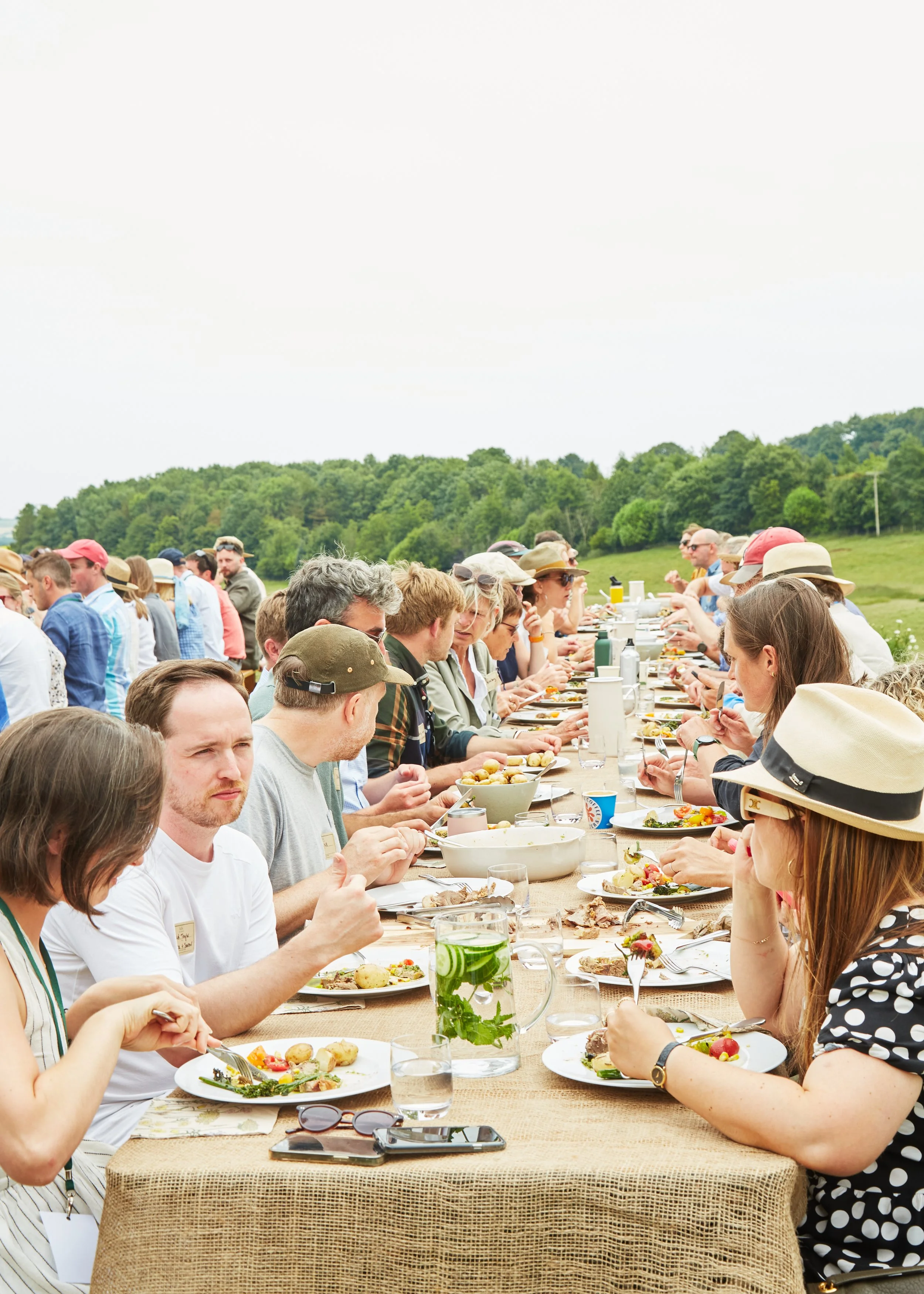
Enjoy a delicious seasonal farm-to-fork lunch hosted by The Bushcamp, featuring Asado-cooked lamb from the farm, locally sourced produce, and a seasonal menu — all included in the price of your ticket!
The Bushcamp is brought to you from the team behind The Bull in Charlbury and The Pelican in Notting Hill, a nomadic English safari experience shaped by fire, landscape and seasonality.

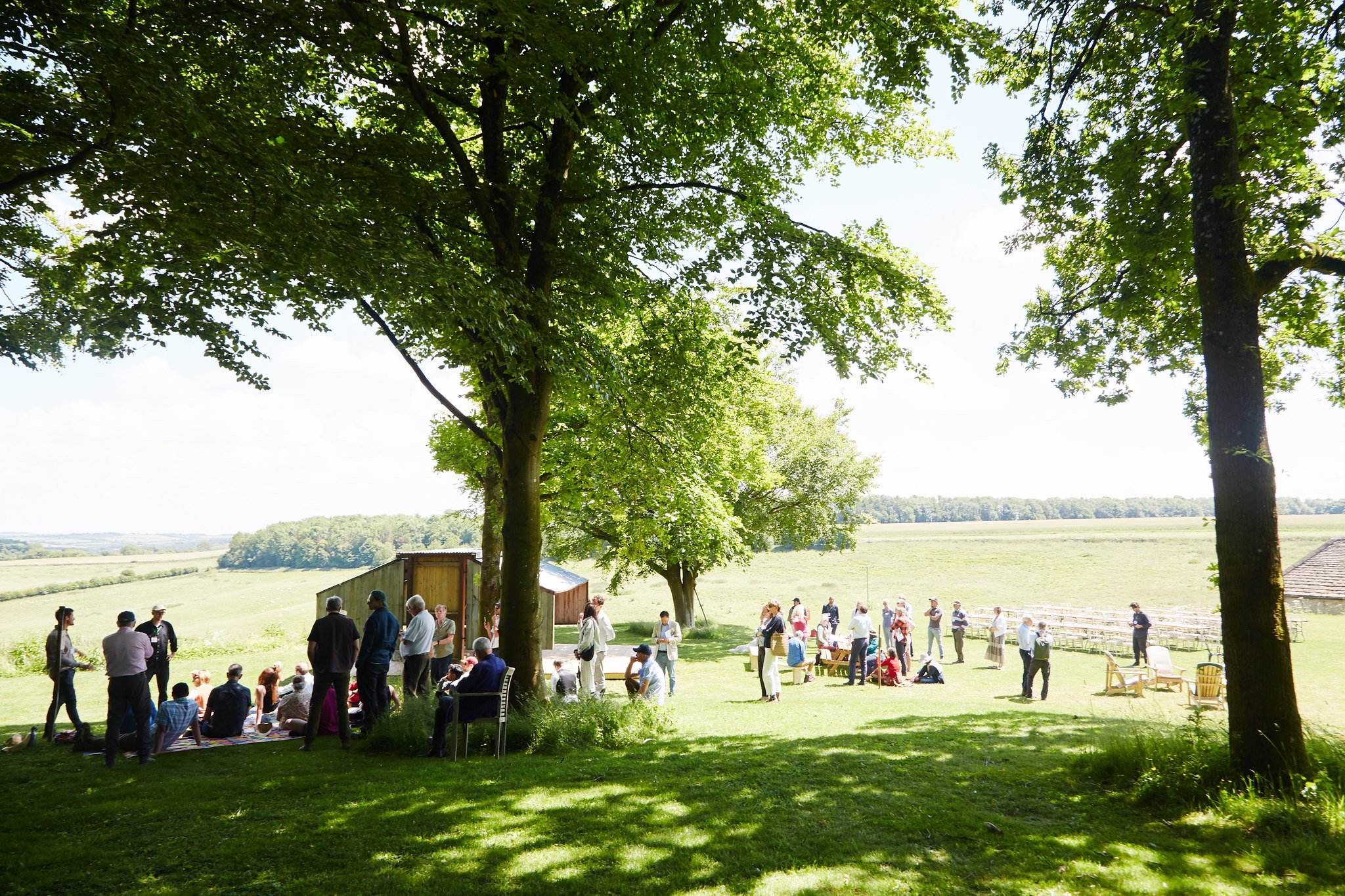
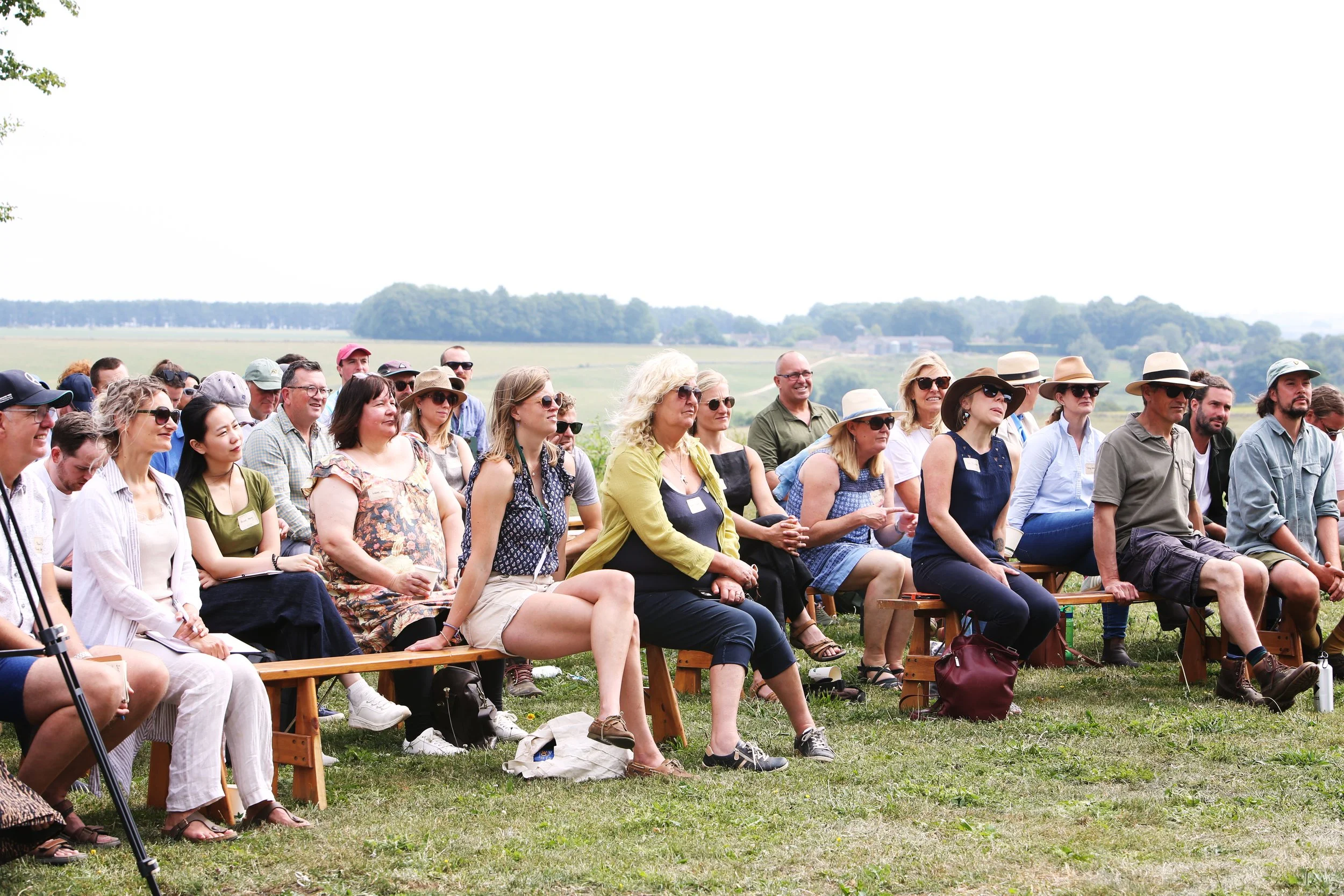
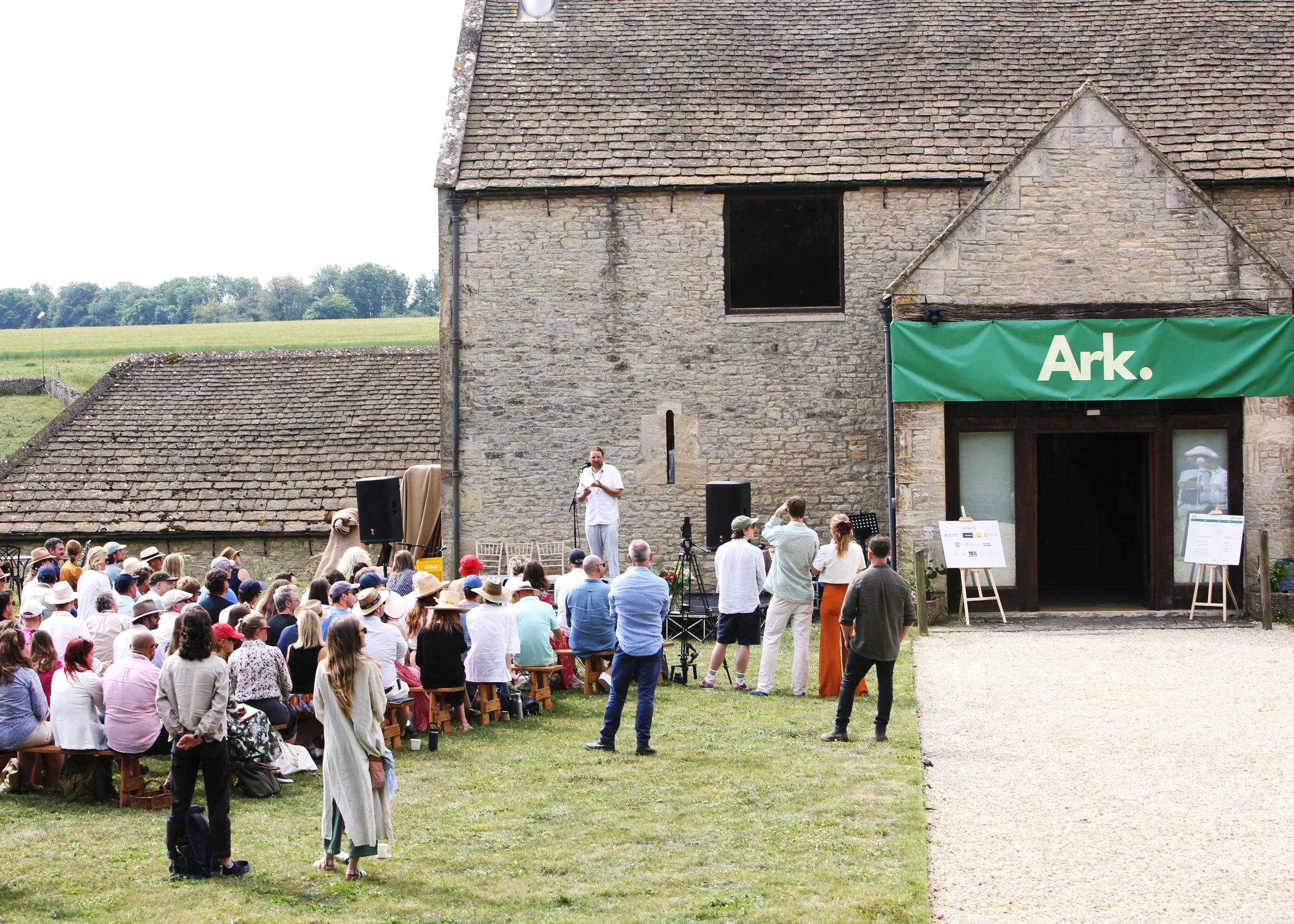
Celebrate the Summer Solstice with a unique gathering of farmers, landowners, policymakers, scientists, retailers, hospitality and sustainability leaders at Ark Summit 2026 - a day of inspiring keynotes, dynamic discussions, and hands-on outdoor workshops dedicated to regenerative and organic farming, agroecology, nature restoration, nature-based solutions and landscape recovery.
Set on the stunning Winwood family organic farm in the heart of the Cotswolds, the Summit will explore:
Policy, Capital & System Signals - What has materially changed in SFI/ELMs, tax and food security framing - and how capital, contracts and long-term risk shape farm autonomy.
Markets & Demand - Whether supply chains, hospitality and consumer signals can genuinely fund transition - and how value, risk and food quality are distributed.
Scale & Governance - How catchment collaboration, producer aggregation and landscape models enable regeneration at meaningful scale - and where control sits within those structures.
Practical Resilience Levers - Water and climate adaptation, fossil-free systems, agroforestry, biodiversity as function and ecosystem markets - translated into viable business decisions.
Credible Transition & Culture - What realistic, measurable progress looks like over the next decade - and how education, food literacy and reconnection with land shape long-term resilience
The day includes:
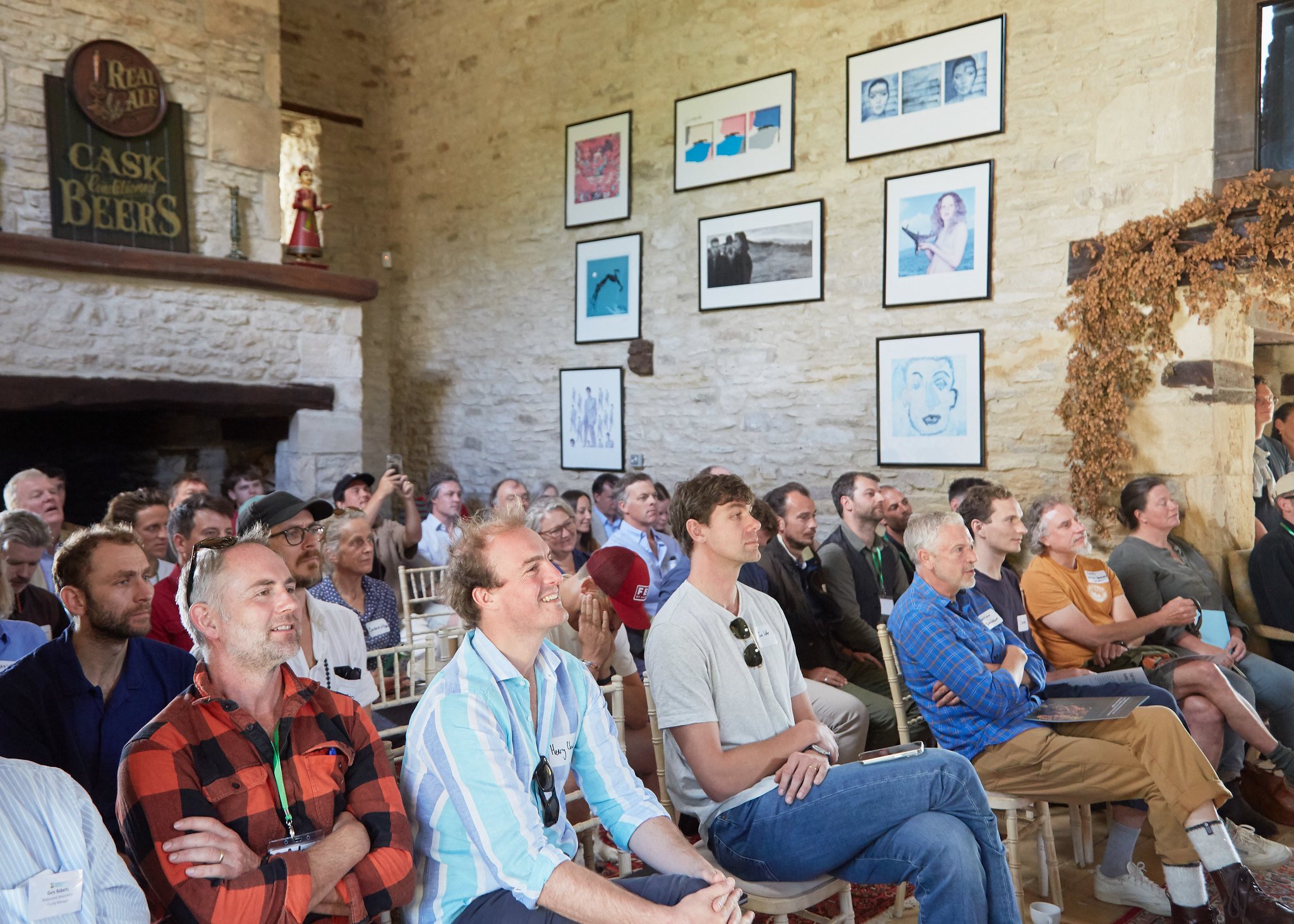
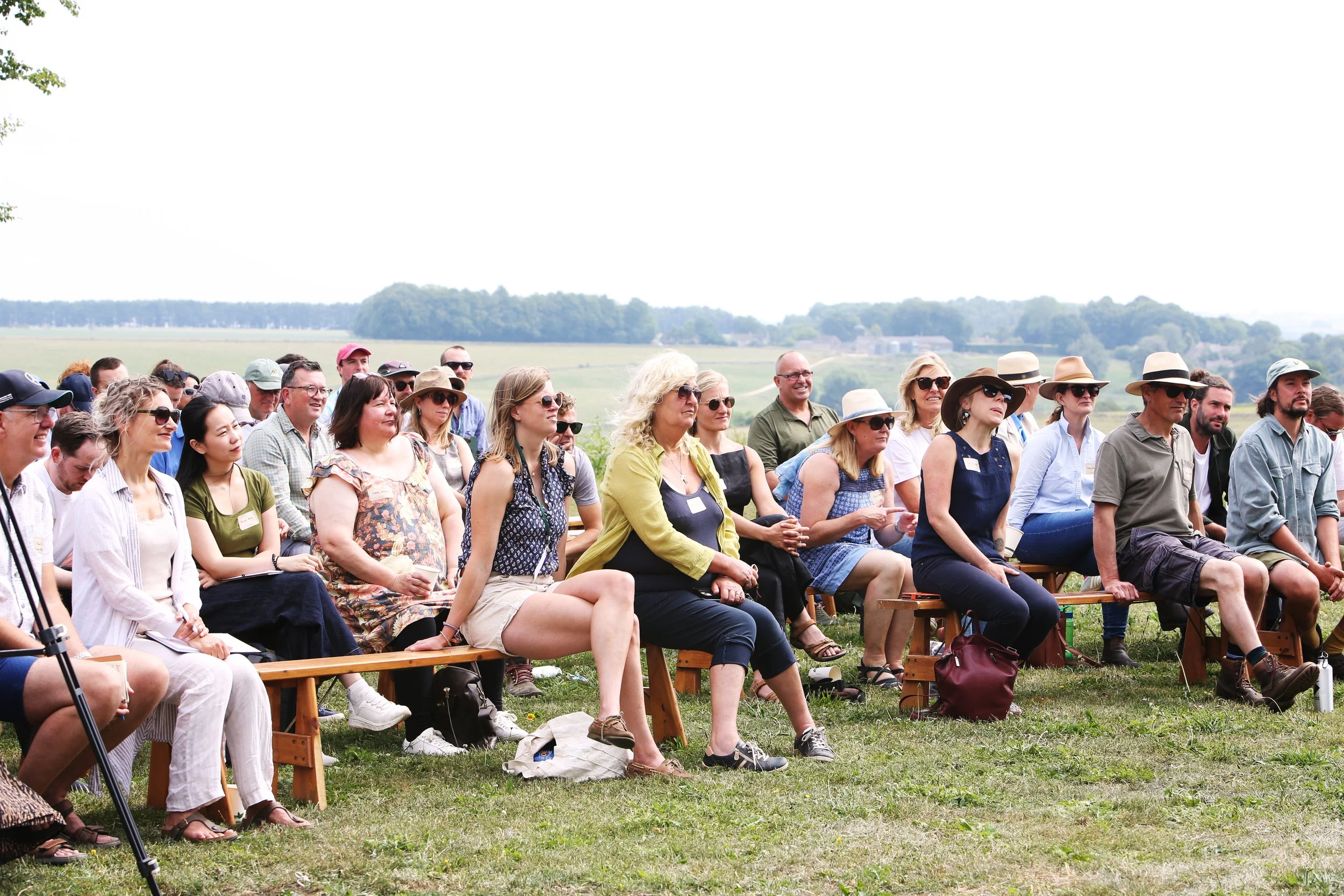
Engaging debates on the future of sustainable food, nature friendly farming and biodiversity
Farm-to-fork seasonal feast cooked over outdoor Asado grills
A guided farm tour showcasing organic regenerative agriculture in action
Outdoor workshops, discussion groups, foraging tours & artisan producers
Live music & entertainment to close the day in style
Join a carefully curated audience of 250 leaders. With only 100 tickets available, this intimate, action-driven event is designed to move beyond conversation and drive real change across land use, food systems, biodiversity, and climate resilience.
Please scroll down for the agenda and speakers list
Last 15 tickets remaining. Please click here to secure yours.
2026 Speakers
Confirmed Speakers:
Thomasina Miers, OBE, Co-founder, Wahaca
Guy Singh-Watson, Founder, Riverford
Helen Browning, OBE, CEO, Soil Association
Sue Pritchard, Chief Executive, Food, Farming & Countryside Commission
Rt Hon George Eustice, Special Advisor, Pelican Ag
Patrick Holden, CBE, Founder & CEO, Sustainable Food Trust
William Chase, Founder of Tyrrell's, Chase Distillery, Selladore Wines and Willy's ACV
Sophie Gregory, Dairy Farmer, Home Farm
Juliet Davenport, OBE, NED and advisor in Energy Transition and Climate,
Juliet Davenport Consulting, Crown Estate
Joseph Gridley, CEO, Soil Association Exchange
Ally Heard, Co-founder and Creative Director, Tractor Ted
Mike Gooding, Farming Systems Director, AHDB
Tim Coates, Director, North East Cotswold Farmer Cluster
Henry Wood, Food Systems Communicator
James Young, Vice President, Agriculture, McCain Foods
Ivan de Klee, Head of Natural Capital, Nattergal
Katie Ward, Managing Director, microbz
Rachel Lenane, CEO, Gloucestershire Nature + Climate Fund
Claire Mackenzie, Producer, Six Inches of Soil
Alexia Robinson, Founder & CEO, Love British Food
Sarah Brownlie, Development Director, Rebuilding Nature
Alejandro Trenor, Co-Founder and CFO, Soil Capital
Addy Windsor-Clive, Head of Ventures, Regenerate Asset Management
Alex Robinson, Commercial Director, Zora Ecosystems
Eoin Murray, CIO, Rebalance Earth
Edward Earnshaw, Managing Director, Just Farm
Sarah Langford, Author, Rooted
Harry Dyer, Co-Founder, Shrub London
Lieutenant General Richard Nugee CB CVO CBE, Former Non-Executive Member for the Defence Safety and Environmental Committee
Meg Crossan, Neurodivergent Founder & Principal Consultant, This Barefoot Life
Ed Horton, Regenerative Farmer & Managing Partner, SS Horton & Sons
Francesca Hicks, Communications Manager, Conservation Collective
Lee Truelove, Director of Regenerative Farming & Agriculture, First Milk
Geetie Singh-Watson MBE, Owner & Founder The Bull Inn & Albatross
ffinlo Costain, Chief Editor, 8point9
Ed Thorne, Partner, Sand River
Jonty Brunyee, Agroecological Farmer and Regenerative Mentor/Consultant, Conygree Farm
Tim Field, Co-Founder, North East Cotswold Farmer Cluster
Isabel Milligan, Head of Natural Capital Portfolio Development, Great Yellow
Bonnie Welch, Head of Projects, Sustainable Food Trust
Jamie Feilden, Founder and CEO, Jamie’s Farm
Alison Muirhead, Senior Commercial Manager, Soil Association Certification
Matt Whitney, Manager, Oxfordshire Local Nature Partnership Secretary, Local Nature Recovery APPG
Rachel Phillips, CEO, Apricot Centre
Emily Ashworth, Digital Editor, Farmers Guardian
Ben Andrews, Agroecological Farmer
David Wilson, Director, Earthtime
Karen Lindley, Head of Biodiversity Net Gain, Trust for Oxfordshire’s Environment
Tamara Giltsoff, Founding Partner, Place Finance Lab
Ian Wilkinson, Founder & Director, FarmED
Max Bodmer, Director of Nature Advisory Services, Renew Earth
Swaantje Marten, Lead Account Manager - Nature Reporting, Land App
Thomas Slattery, Communications Specialist, The ADOPT Support Hub
Stuart Oates, Nuffield Scholar, Fossil Free Farm
John Taylor, Head of Strategic Development, Community Energy England
Niels Corfield, Independent Farming Advisor & Trainer
Henry Unwin, Director of Client Strategies, Simply Sustainable. Non Exec Director, Farm Carbon Toolkit
Dr Guy Hayward, Director, The British Pilgrimage Trust
Annie Landless, Farm & Enterprise Manager, Ampney Brook Farm
Lizzy Mary-Jane Farmer, Director Owner, Tellus Mater
Simon Lamb, Founder, Common Nature
Tim Parton, Regenerative Farmer & Agronomist
Bridget Elworthy, Author & Co-Founder, The Land Gardeners
Henrietta Courtauld, Author & Co-Founder, The Land Gardeners
Jennie Tatlock, Regenerative Farmer
Emilie Jaspers, cofounder, Star Seed
Ed Pycraft, cofounder, Star Seed
Please book your ticket here today to avoid missing out
Ark Summit 2025 - Testimonials
"We thought Ark Summit was excellent again this year - an intimate gathering with targeted, thought-provoking content and executed to a high level"
The Sand River Team
In a packed ag show season, there was no better warm up to Groundswell than Ark. Exceptionally curated to combine big picture thinking with practical, hand on workshops, it struck the perfect balance. It also grounded wider regenerative food system ideas in the distinct, regional character of the Cotswolds. Tom Pycraft’s Ark gave us a brilliant opportunity to engage farmers around ADOPT - and it’s firmly in my calendar from now on.” Thomas Slattery, Communications Specialist, The Adopt Support Hub
“The Regenerative Organic Event of the year featuring high-standard speakers with diverse perspectives. Superb presentation and we value Tom's commitment to making it memorable each time. A great mix of workshops and debates.”
Shipton Mill
“Ark Summit is no ordinary gathering. It manages to bring together some of the biggest names and voices in the regenerative land revolution, combining serious, impactful debates with outdoor experiences and discussions. There are few other gatherings which create this atmosphere of community, hope and joy whilst simultaneously coming up with real world solutions.”
Sarah Langford, Author, Rooted
Ark Summit 2026
Weathering Uncertainty: Cultivating Long-Term Resilience for Land, Food, Biodiversity and Community
Ark Summit 2026 explores how UK farming and land use can build long-term resilience in the face of climate volatility, geopolitical instability and market uncertainty.
You will join a carefully curated gathering of around 250 senior farmers, landowners, policymakers, investors, food businesses and conservation leaders working across organic and regenerative farming, nature recovery, food systems and land stewardship. It is held on a working farm where the land itself is central to the conversation, not a backdrop.
The coming decade will not be stable. Policy will continue to shift. How food is valued - and who gets paid - is being rewritten. Climate volatility will intensify. At the same time, expectations around food quality, environmental outcomes and public accountability are rising. The question is not whether change is coming, but whether farms, supply chains and institutions are structured to withstand it. Resilience is not a slogan — it is a design challenge across land use, capital, governance and culture.
With only 100 public tickets available, and the remaining places reserved for invited guests, the Summit is intentionally small and highly focused. It exists not simply for discussion, but to generate clarity, agency and practical action across land use, food systems, biodiversity and climate resilience.
The day moves from national context and policy, through capital and markets, into landscape-scale regeneration and practical on-farm tools — closing with an honest debate about what credible transition really looks like over the next ten years.
Each session is built to leave the room with practical signals, guardrails and next steps — not just ideas, but decision-making clarity.
Ark Summit 2025 - Testimonials
“Ark is a special event, set on a beautiful farm. There was a brilliant mixture of speakers and types of talks and sessions. The atmosphere was warm and congenial and allowed us all to chat freely. The only sadness was I missed the music and dancing!” Claire Mackenzie, Producer, Six Inches of Soil
“The Ark Summit is a brilliant focal point for those wanting to explore the connections between the health of our natural environment and the health of our food system. At a time when agriculture is rediscovering lost knowledge from the past and trying new approaches that are more in tune with nature and the health of our soils, the Ark Summit is a great platform through which knowledge is shared.” George Eustice, Director of Pelican AG
In partnership with
Timed Agenda
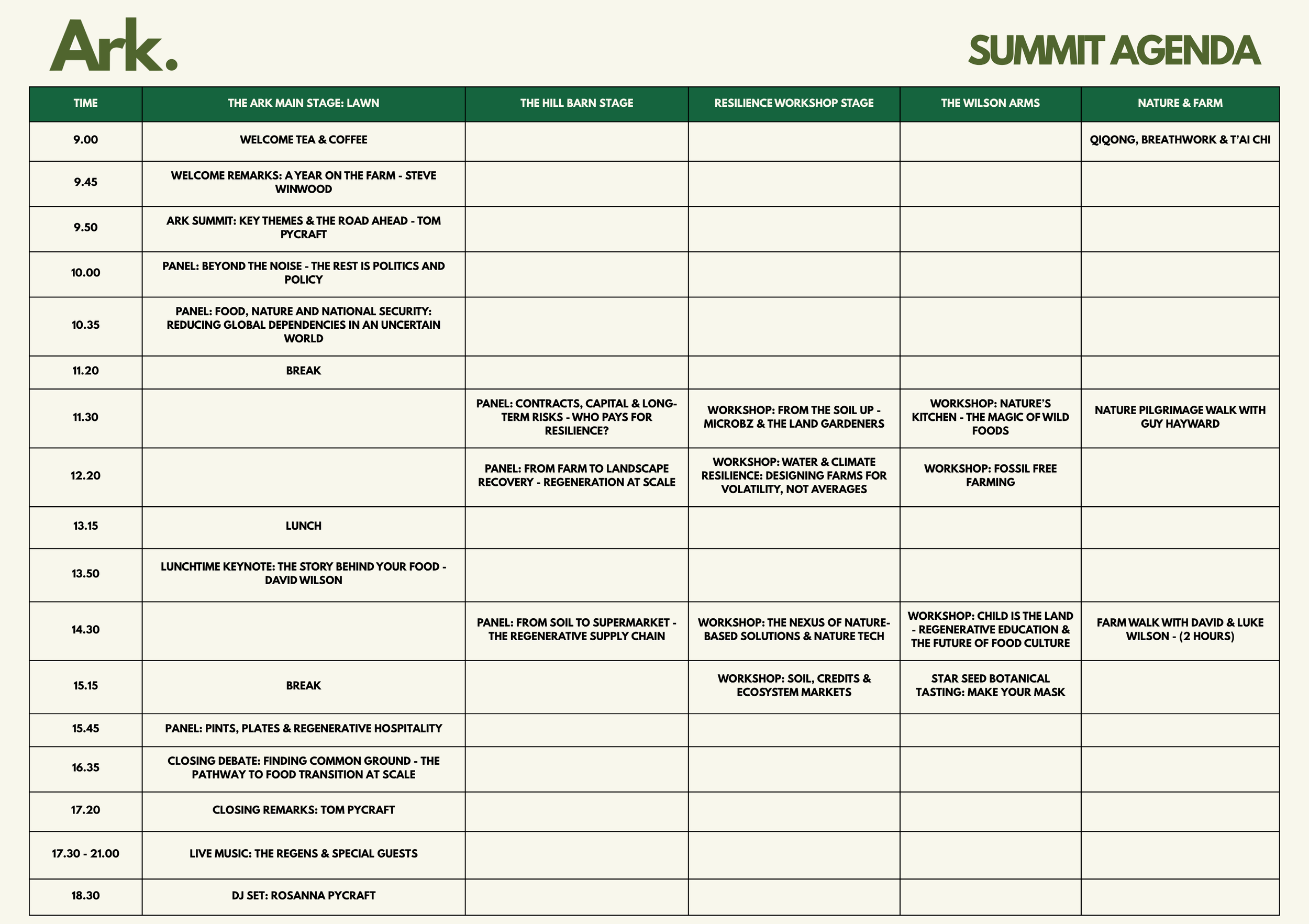
Full Programme & Session Briefs
The Ark Main Stage: Roadmapping the Future of Land, Food & Nature
09:45 -Welcome Remarks: A year on the Farm
Steve Winwood, MBE
09:50 -Ark Summit 2026: Weathering Uncertainty - Key Themes & The Road Ahead
Tom Pycraft, Founder, Ark
10:00 - Beyond the Noise – The Rest Is Politics and Policy
Since 2024, UK farming has faced rapid policy re-engineering, from the redesign of SFI, debate around inheritance tax and Agricultural Property Relief, the rise of biodiversity and carbon markets, and renewed rhetoric around food security and sovereignty. At the same time, media narratives of “war on farmers”, rewilding land grabs, and political U-turns have created confusion and volatility for farm businesses trying to plan long term. This panel cuts through the noise to examine what has materially changed in grants, tax, ELMs architecture and the long-term farming roadmap; whether nature finance is complementing or crowding out regenerative agriculture; how different political scenarios could reshape support for farming, net zero and land use; and, crucially, how farmers can build resilient business models that withstand policy swings while continuing to produce food, restore ecosystems and remain profitable.
RT Hon George Eustice, Special Advisor, Pelican Ag
Sophie Gregory, Dairy Farmer, Home Farm
Sue Pritchard, Chief Executive, Food, Farming & Countryside Commission
Interviewed by: Patrick Holden, CBE, Founder & CEO, Sustainable Food Trust
10:35 - Food, nature and national security: reducing global dependencies in an uncertain world
National food resilience, in the face of ecological degradation and geopolitical rupture, requires fundamental action to address inherent systemic risks and vulnerabilities that have the capacity to cascade and threaten societal health and cohesion. Understanding weaknesses within key supply chains - for example for fertilisers, pesticides, antibiotics, machinery parts, data and energy - and within society - for example, diet, health, power imbalance and policy - will be critical if we are to reduce exposure to increasingly volatile markets, establish food system resilience, reduce farm dependencies and strengthen UK value chains.
This session will examine geopolitical risk and explore actions that can be taken at farm level and within the food system more broadly.
Helen Browning, OBE, CEO, Soil Association
James Young, Vice President, Agriculture, McCain Foods
Mike Gooding, Farming Systems Director, AHDB
Lieutenant General Richard Nugee CB CVO CBE, Former Non-Executive Member for the Defence Safety and Environmental Committee
Moderator: ffinlo Costain, Chief Editor, 8point9
13:50 - Lunchtime Keynote: The Story Behind Your Food – The Organic Regenerative Way
As guests enjoy a lunch sourced from the farm and local organic regenerative producers, David Wilson will share the story behind the food being served and the farming philosophy that underpins it. Drawing on decades of experience in organic regenerative agriculture, David will explore the importance of heritage grains, soil health, biodiversity and mixed farming systems in producing resilient, nutrient-dense food. From traditional wheat varieties and diverse grazing systems to long-term soil stewardship, this session offers an insight into how farming can nourish both people and landscape together.
David Wilson, Director, Earthtime
15:45 - Pints, Plates & Regenerative Hospitality
Independent pubs, restaurants and chefs have quietly been some of the boldest supporters of local, organic and regenerative farming. They take the risk. They back the farmer. They tell the story on the menu. But can that spirit scale? How do we turn growing demand for good, properly sourced food into fair farmgate pricing and long-term relationships? How do we build supply chains based on trust rather than squeeze? And how do we tell the story well enough that more people actually choose it? How are vertically integrated growing operations working in practice - and what can be learned? Can these successes translate into wider catering, schools and healthcare? A candid, grounded conversation about what works, what does not, and how hospitality might be one of the most practical bridges between land and people. With proper organic ale in hand.
Geetie Singh-Watson MBE, Owner & Founder The Bull Inn & Albatross
Henry Wood, Food Systems Communicator
Alexia Robinson, Founder & CEO, Love British Food
Thomasina Miers, OBE, Co-founder, Wahaca
Moderator: Ian Wilkinson, Founder & Director, FarmED
16:35 Closing Debate: Finding Common Ground – The Pathway to Food Transition at Scale
After a day exploring policy, capital, supply chains, practical farming and landscape-scale regeneration, this closing debate asks a crucial question: what does credible transition actually look like over the next decade? Regenerative agriculture is often presented as a unified movement, yet clear differences remain between fully organic systems and lower-input regenerative approaches that retain synthetic tools. In a time of climate volatility, economic pressure and political uncertainty, what is a realistic and scalable pathway forward? How do we align farmers, policymakers, retailers, investors and consumers around genuine system change? Can ambition and pragmatism coexist, and if so, on what terms? Is widespread incremental improvement across conventional systems more impactful in the short term than a smaller number of full organic transitions? If so, how should progress be measured, and how do we create incentives for continuous year-on-year improvement? Beyond environmental metrics, where do food quality, public health and nutrient density sit within this transition? Can they become economic drivers of change rather than moral arguments at the margins?
Jonty Brunyee, Agroecological Farmer and Regenerative Mentor/Consultant, Conygree Farm
Ed Horton, Regenerative Farmer & Managing Partner, SS Horton & Sons
William Chase, Founder, Willy's ACV
Moderator: Rachel Phillips, CEO, Apricot Centre
17.30 - LIVE MUSIC
Special Guest
Stuart Oates, David Wilson & The Regens
The Hill Barn Stage: Markets, Capital & Supply Chains
11:30 - Contracts, Capital & Long-Term Risk – Who Pays for Resilience?
As public budgets tighten, resilience increasingly depends on how capital flows through farming and land use. From SFI and ELMs design to biodiversity net gain, carbon markets and blended finance structures, new funding mechanisms promise opportunity, but also introduce long-term contractual obligations, data requirements and liability risks. This session explores the “nuts and bolts” of financing resilience: how public and private capital interact; who carries downside risk in long-duration environmental agreements; whether nature finance complements or competes with productive farming; and how farmers can navigate contracts that shape land-use decisions for decades. As these new markets develop, how do we ensure that environmental resilience, farm profitability and domestic food production go hand in hand, rather than being treated in siloes?
Tim Coates, Director, North East Cotswold Farmer Cluster
Tamara Giltsoff, Founding Partner, Place Finance Lab
Alejandro Trenor, Co-Founder and CFO, Soil Capital
Alex Robinson, Commercial Director, Zora Ecosystems
Moderator: Thomas Slattery, Communications Specialist, The ADOPT Support Hub
12:20 - From Farm to Landscape Recovery – Regeneration at Scale
Scale matters to ecosystems, to investors and to markets. While individual farms can improve soils, water and biodiversity, many resilience challenges operate beyond farm boundaries. Flood mitigation, habitat connectivity, nutrient management and carbon sequestration often require coordination at catchment and landscape level.
Economically, projects must be large enough to justify the transaction, monitoring and structuring costs that institutional capital, investors and supply chains require. Aggregated natural capital schemes and producer groups can reduce risk, lower overheads and create volumes that markets can absorb, whether in commodities, carbon or biodiversity units.
This session examines the lessons emerging from landscape recovery projects, catchment partnerships and aggregated models. What environmental and economic outcomes can genuinely be measured at landscape scale - improved water retention, biodiversity recovery, yield stability, risk reduction? Do these models strengthen local farming economies and resilience, or do they risk concentrating control in the hands of large capital actors? The question is not simply how to restore nature, but how land, finance and community intersect when resilience is pursued beyond the farm gate. Crucially, is landscape-scale collaboration the mechanism that enables food and nature transition at the scale that planetary and human health require?
Tim Field, Co-Founder, North East Cotswold Farmer Cluster
Matt Whitney, Manager, Oxfordshire Local Nature Partnership Secretary, Local Nature Recovery APPG
Sarah Brownlie, Development Director, Rebuilding Nature
Eoin Murray, CIO, Rebalance Earth
Edward Earnshaw, Managing Director, Just Farm
Moderator: Addy Windsor-Clive, Head of Ventures, Regenerate Asset Management
14:30 - From Soil to Supermarket – The Regenerative Supply Chain
As organic food remains a premium, values-driven choice and regenerative agriculture moves from niche to mainstream, the central question is whether supply chains can genuinely support transition at scale. Retailers increasingly speak of soil health, biodiversity and reduced chemical inputs, yet farmers continue to face tight margins, volatile contracts and asymmetric risk. Can supermarkets and food businesses meaningfully co-invest in long-term resilience, or are regenerative commitments constrained by price competition and short-term procurement models? How are value, risk and data distributed along the chain - and who ultimately captures the upside? Are we challenging the status quo deeply enough to shift structural incentives? At the supermarket, or through alternative farm-to-consumer models, where do food quality, nutrient density and public health truly sit? Can better food become an economic driver of transition, creating a genuine social premium that rewards outcomes rather than marketing claims? Or will regeneration remain a sustainability add-on rather than a core commercial proposition? As online grocery platforms and AI increasingly influence what consumers see, compare and buy, who ultimately controls the signals that determine which food systems are rewarded - and which are discounted? This session examines what realistic, scalable transition models look like for growers, processors and retailers alike.
Guy Singh-Watson, Founder, Riverford
Lee Truelove, Director of Regenerative Farming & Agriculture, First Milk
Harry Dyer, Co-Founder, Shrub London
Alison Muirhead, Senior Commercial Manager, Soil Association Certification
Moderator: Sarah Langford, Author, Rooted
17.30 - LIVE MUSIC
Special Guest
Stuart Oates, David Wilson & The Regens
Join us at Ark Summit 2026—where ideas take root, and action begins. Get your ticket here today
Want to speak or sponsor? Email tom@arkce.com if you have an idea you want to discuss
Resilience Workshop Stage
Interactive workshops exploring Practical Tools for Long-Term Farm Viability
11:30 - From the soil up: Feeding our soils for resilience, productivity, healthy crops, livestock and people
Join this interactive workshop exploring how we heal systems from the soil up, with experts sharing how Microbz, The Land Gardeners, and innovative farmers are championing healthy, productive soil systems through the latest soil and microbial science. The session will examine the connection between living soils, nutrient density, livestock health, gut health, and the quality of the food we produce, showing how soil biology underpins resilience across the whole farm and food system.
Tim Parton, Regenerative Farmer & Agronomist
Bridget Elworthy, Author & Co-Founder, The Land Gardeners
Henrietta Courtauld, Author & Co-Founder, The Land Gardeners
Jennie Tatlock, Regenerative Farmer
Moderator: Katie Ward, Managing Director, microbz
12:20 - Water & Climate Resilience: Designing farms for volatility, not averages
Catchment thinking at farm scale - water storage, flood mitigation, soil infiltration, drought buffering and collaboration beyond farm boundaries.
Niels Corfield, Independent Farming Advisor & Trainer
Ben Andrews, Agroecological Farmer
Annie Landless, Farm & Enterprise Manager, Ampney Brook Farm
Francesca Hicks, Communications Manager, Conservation Collective
Moderator: Joseph Gridley, CEO, Soil Association Exchange
14:30 - The Nexus of Nature-Based Solutions & NatureTech
Often positioned as opposing approaches, this workshop explores how Nature-Based Solutions and NatureTech can work together to build more resilient, productive and investable land systems. Bringing together pioneers in agroforestry, natural capital, ecosystem restoration, data, monitoring and nature finance, we will examine how the intelligence and resilience of nature can be complemented by human ingenuity, technology and investment. From AI, satellite monitoring and biodiversity measurement to ecosystem markets and land management platforms, the session will explore what role data and technology should play in scaling regeneration without losing ecological integrity or farmer agency.
Ed Thorne, Partner, Sand River
Max Bodmer, Director of Nature Advisory Services, Renew Earth
Swaantje Marten, Lead Account Manager - Nature Reporting, Land App
Rob Godfrey, Co-Founder, Treeconomy
Moderator: Isabel Milligan, Head of Natural Capital Portfolio Development, Great Yellow
15:15 - Soil, Credits & Ecosystem Markets
Turning environmental outcomes into income - without losing control. How soil carbon and biodiversity markets actually work in practice, including measurement, baselining, contract length, stacking, liability and exit risk. What to look for before signing, and how to judge whether an ecosystem agreement strengthens long-term farm resilience or restricts future flexibility.
Karen Lindley, Head of Biodiversity Net Gain, Trust for Oxfordshire’s Environment
Rachel Lenane, CEO, Gloucestershire Nature + Climate Fund
Alejandro Trenor, Co-Founder and CFO, Soil Capital
Sarah Brownlie, Wilder Carbon – Programme Director
Moderator: Ivan de Klee, Head of Natural Capital, Nattergal
The Wilson Arms
Join us in the Wilson Arms, a mobile pub built by farmer Luke Wilson, for informal conversations on the future of farming systems, land use and rural culture.
Free Bar with Stroud Brewery & Everflyht Wine
11:30 - Nature’s Kitchen – The Magic of Wild Foods
An interactive workshop exploring how farmers and landowners can use wild food as a tool for education, diversification and additional income. We’ll look at the real potential of wild harvesting and managed wild crops, and how this can translate into workshops, community engagement and value-added products that deepen connection between people and place. With wild makes, bakes and preserved plants and fungi to explore, this session brings the possibilities to life - simple, viable and rooted in the land itself.
Lizzy Mary-Jane Farmer, Director Owner, Tellus Mater
12:20 - Fossil-Free Farming
Reducing exposure to energy price shocks - on-farm renewables, electrification, fuel substitution and system redesign to lower dependency on volatile inputs.
Stuart Oates, Nuffield Scholar, Fossil Free Farm
John Taylor, Head of Strategic Development, Community Energy England
Juliet Davenport, OBE, NED and advisor in Energy Transition and Climate, Juliet Davenport Consulting, Crown Estate
Moderator: Henry Unwin, Director of Client Strategies, Simply Sustainable. Non Exec Director, Farm Carbon Toolkit
14:30 - Child is the Land – Regenerative Education & the Future of Food Culture
If resilience is the theme of the day, it begins with the next generation. This session explores how education, food literacy and direct exposure to farming shape long-term cultural change. What role can schools, farms and community organisations play in rebuilding connection between land, food and society? How are efforts to bring food and farming back into the national curriculum progressing - and what still stands in the way? What happens when children spend time on farms, grow food, cook from scratch and understand seasonality? How does reconnecting with nature influence confidence, mental health and life choices? In an age of screens, urbanisation and shrinking access to land, can we restore a living connection to nature - and in doing so cultivate a society better equipped to farm, eat and live in harmony with it?
Claire Mackenzie, Producer, Six Inches of Soil
Jamie Feilden, Founder and CEO, Jamie’s Farm
Bonnie Welch, Head of Projects, Sustainable Food Trust
Meg Crossan, Neurodivergent Founder & Principal Consultant, This Barefoot Life
Ally Heard, Co-founder and Creative Director, Tractor Ted
Moderator: Emily Ashworth, Digital Editor, Farmers Guardian
15:15 - Star Seed Botanical Tasting: Make your Mask
A 30-minute sensory journey from the wild landscapes of East Africa to the botanical heartland of Europe - taste, create and transform. A hands on and interactive experience tasting the raw botanical ingredients, sipping herbal skin tea from the range, then blending and making your own customised face mask using Star Seed’s edible botanicals matched to their skin type. Everyone leaves with a goodie bag.
Emilie Jaspers, cofounder, Star Seed
Ed Pycraft, cofounder, Star Seed
The Fields: Nature walks
Join us on the lawn and in the fields for a series of interactive workshops and walks that connect soil, story, and regeneration.
All day - Botanic Shed School of Nature - A garden space to connect people with the power of friendship with nature.
Lara Cowan, Founder, Botanic Shed
09:00 - Qigong, Breathwork & T'ai Chi: Waking Up with Nature
Simon Lamb, Founder, Common Nature
11:30 - Pilgrimage Walk
Dr Guy Hayward, Director, The British Pilgrimage Trust
14:30- Organic Farm Walk
Six years into the farm’s organic journey, explore how heritage grains, mob grazing and low-input systems are regenerating the land on the farm.
David Wilson & Luke Wilson
Join us at Ark Summit 2026—where ideas take root, and action begins. Get your ticket here today
Want to speak or sponsor? Email tom@arkce.com if you have an idea you want to discus